From Just History to a Story: Revitalizing the Historic Stair Museum at Union Depot
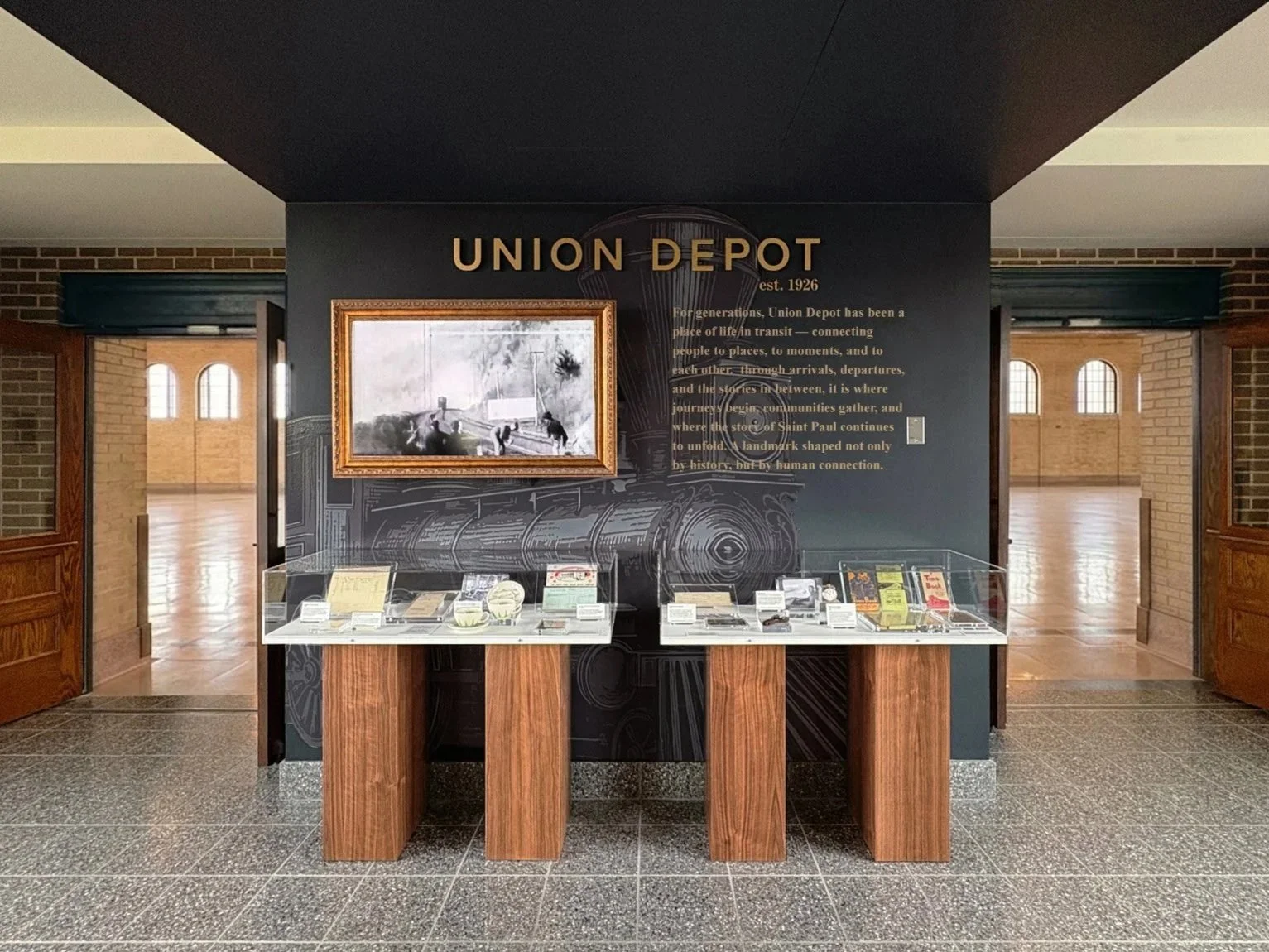
Union Depot is one of Minnesota’s most iconic architectural landmarks — a place where generations of travelers began their journeys and where St. Paul’s railroad history still echoes through every arch, beam and corridor. When Union Depot partnered with West Design to renovate the Historic Stairs museum, the goal was clear: transform a static historical display into a cohesive, immersive museum experience that truly tells Union Depot’s story.
This project wasn’t just about updating an exhibit. It was about elevating the depot’s legacy, strengthening its visual identity and creating a museum environment worthy of its historic significance.
The Creative Brief: Turning Archival History Into an Engaging Museum Experience
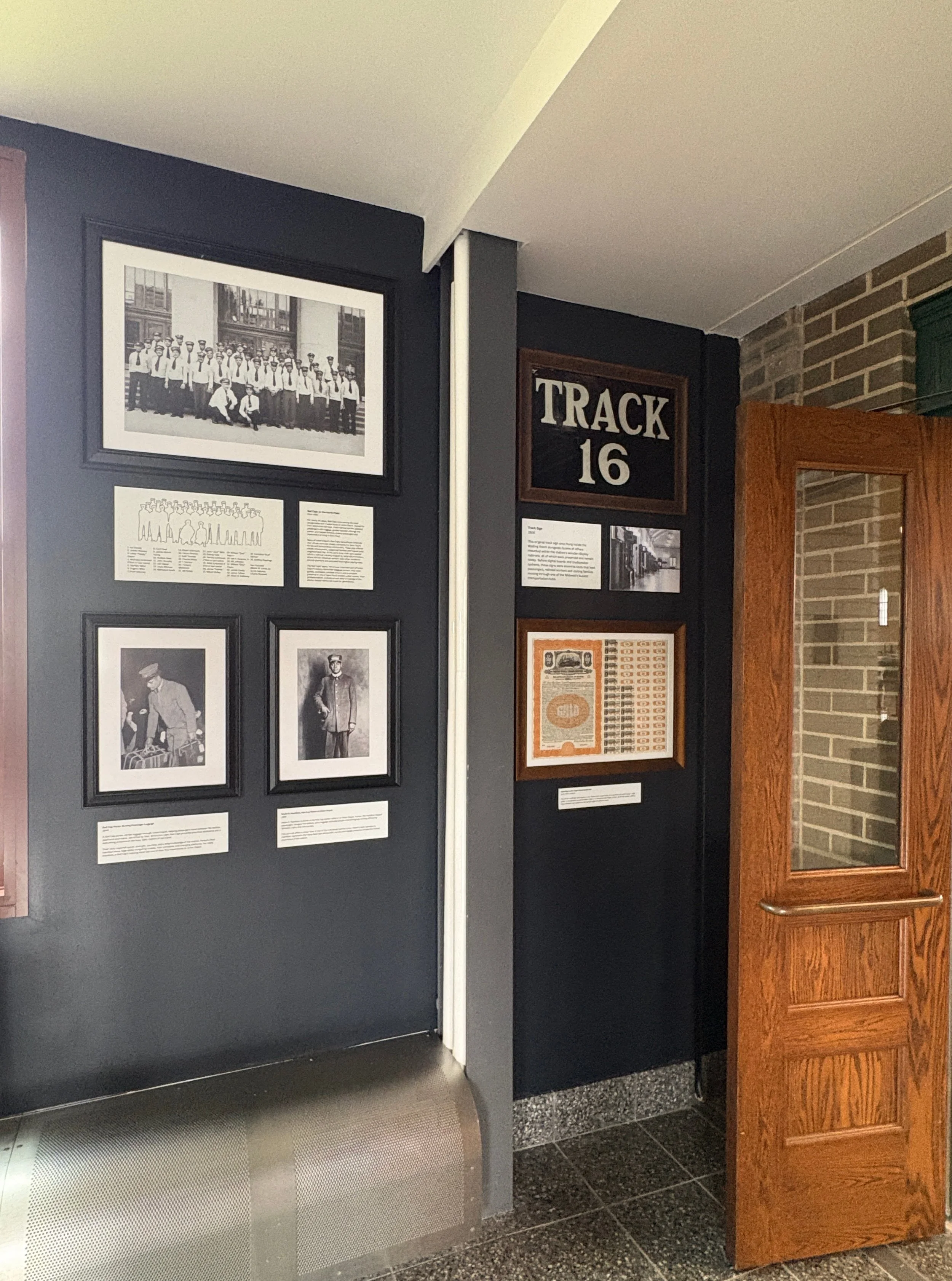
The existing Historic Stair exhibit held incredible content — archival photographs, railroad artifacts, architectural drawings and interpretive materials — but lacked a unified visual identity. The presentation felt fragmented, making it difficult for visitors to follow Union Depot’s narrative.
West Design was brought in to reimagine the space through a museum exhibit design approach that improved storytelling, visitor flow and overall visual cohesion while honoring the depot’s historic architecture.
Project Scope Included:
Museum exhibit design and historical curation
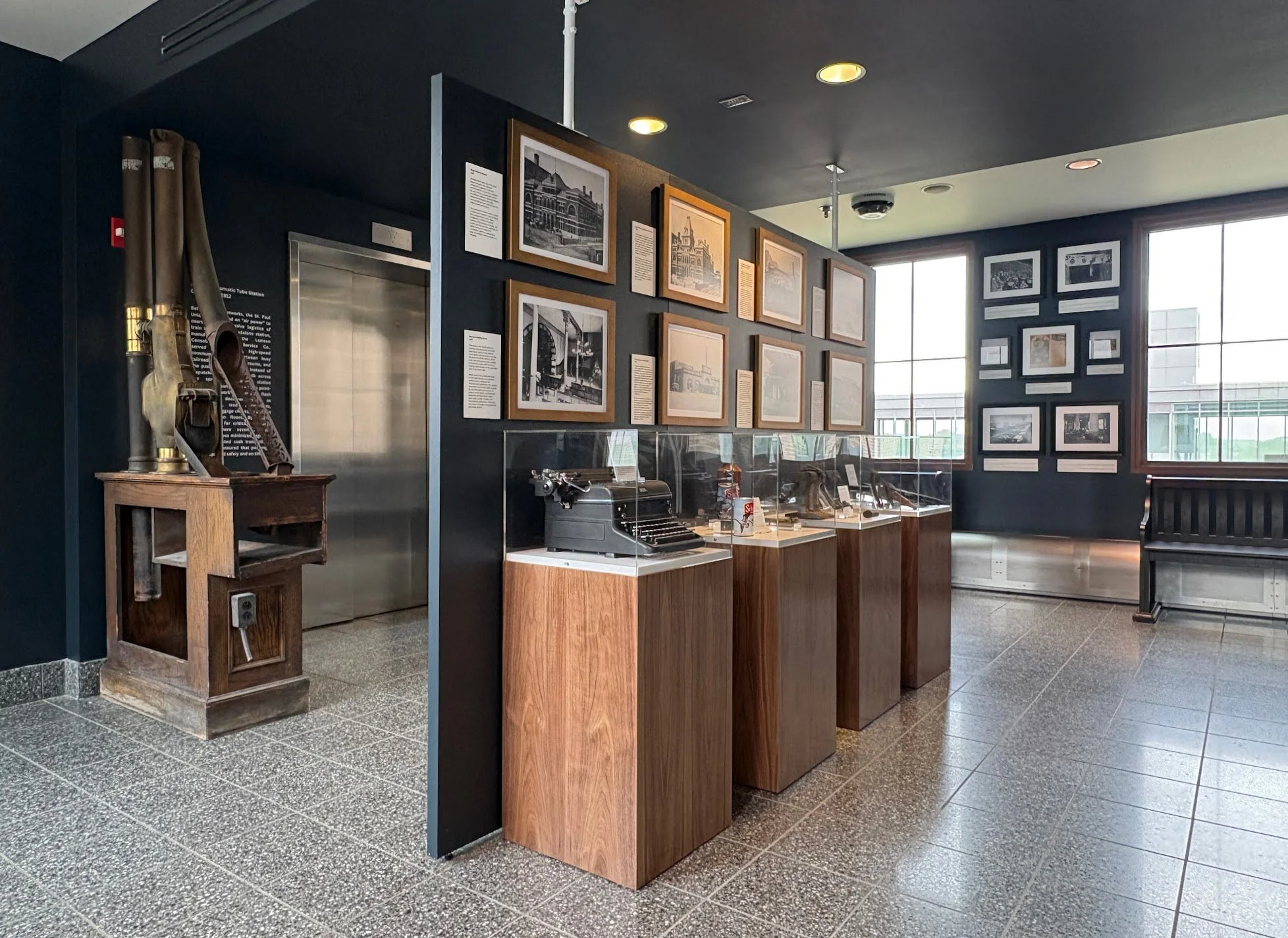
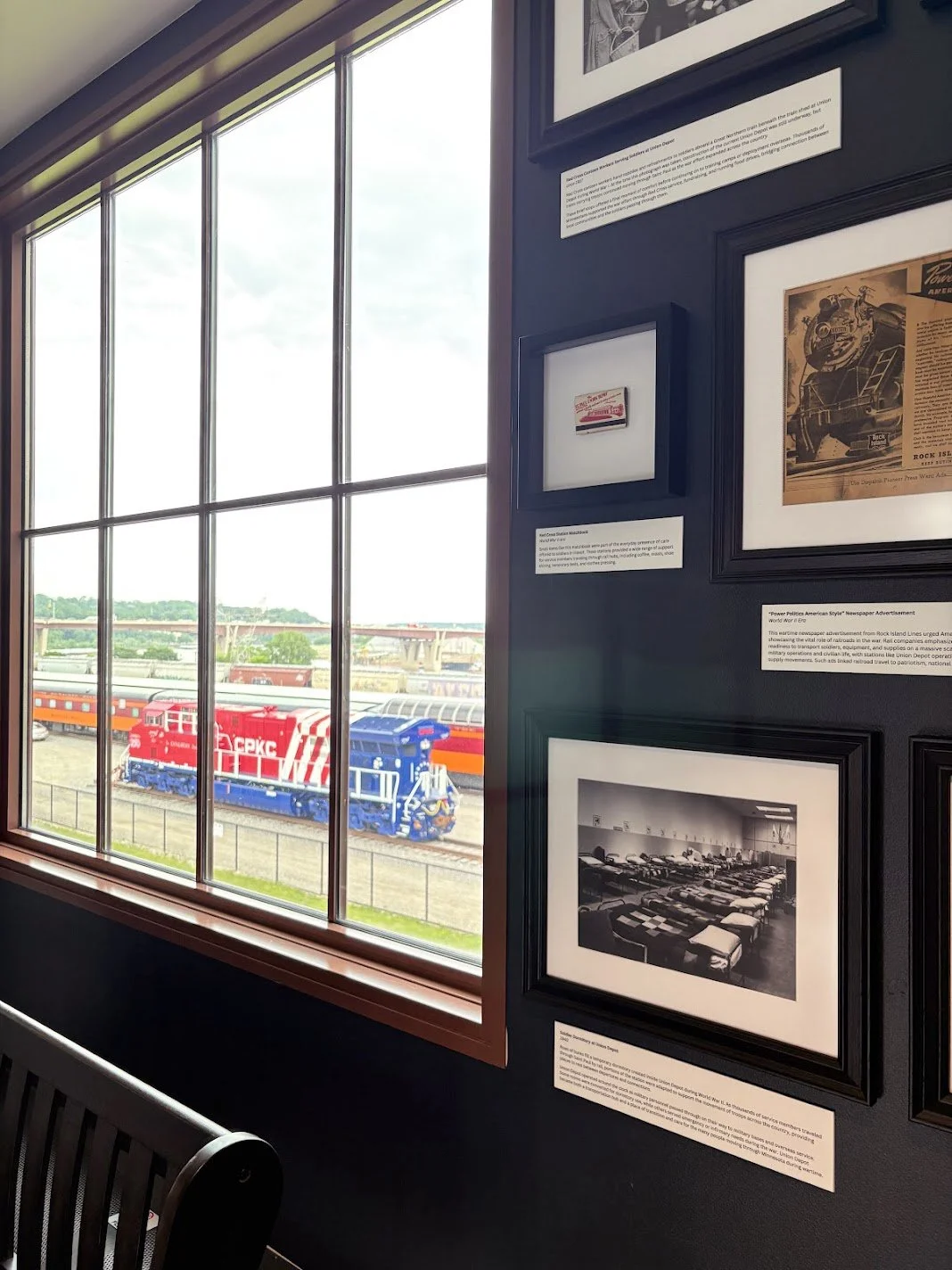
Reorganization of archival photographs and railroad artifacts
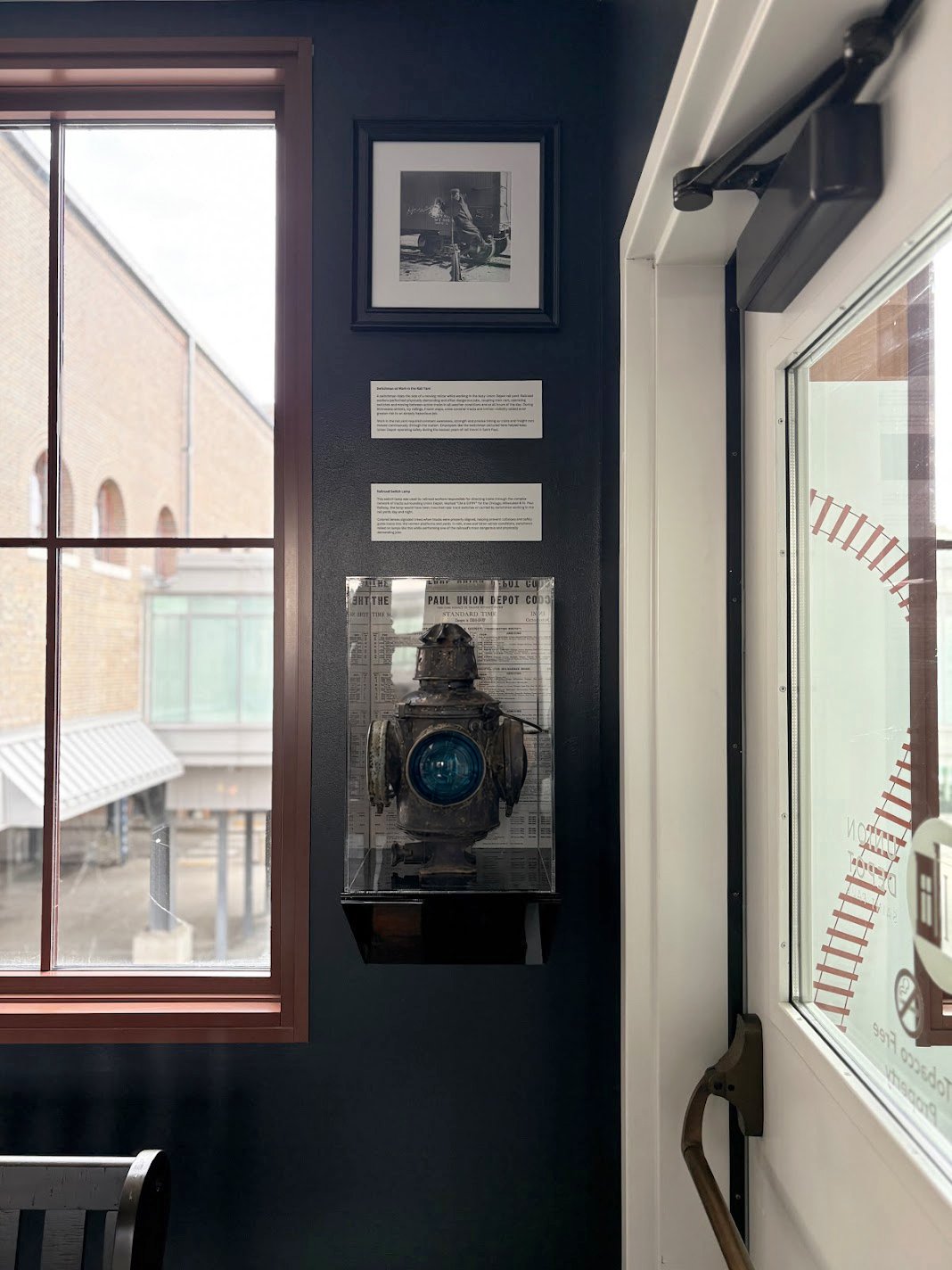
Custom display case planning and exhibit styling
Interpretive signage and environmental graphics
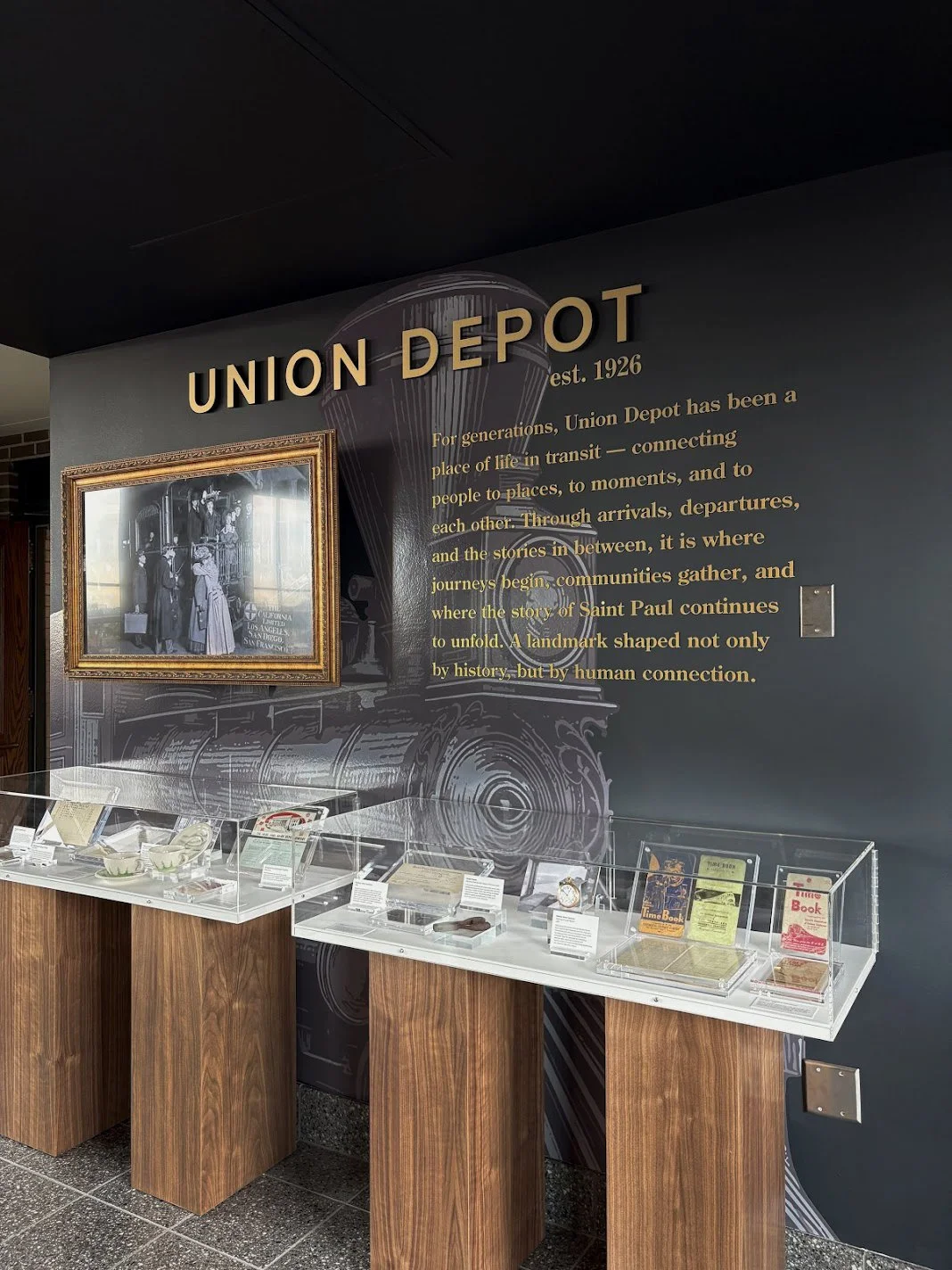
Dimensional Union Depot lettering
Historic wall graphics and locomotive imagery
Digital media integration
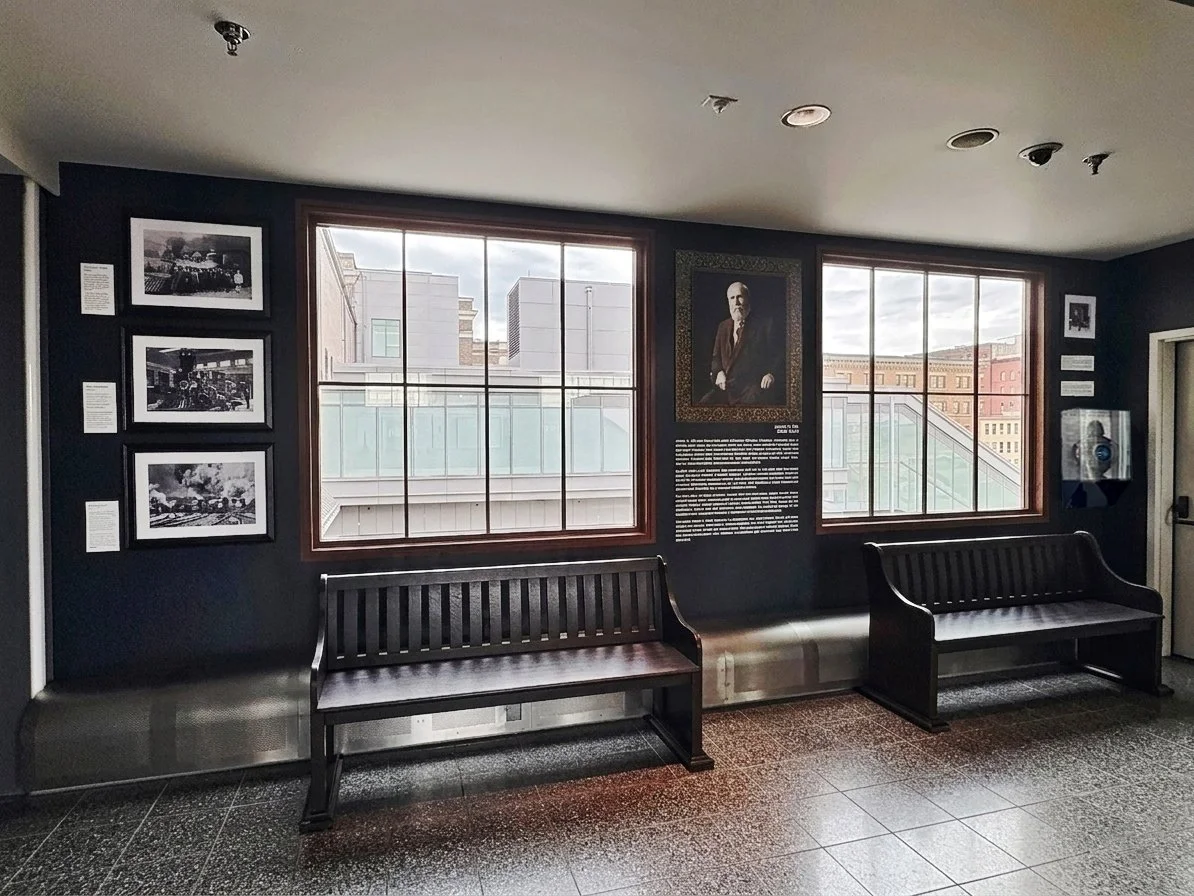
Seating and visitor‑flow improvements
Fabrication and installation coordination
This comprehensive scope ensured the renovation would be a true concept‑to‑completion transformation.
The Design Approach: A Museum‑Quality Environment Rooted in Railroad History
West Design crafted a dramatic, museum‑grade environment inspired by Union Depot’s railroad heritage and architectural character.
A Cohesive Visual Language
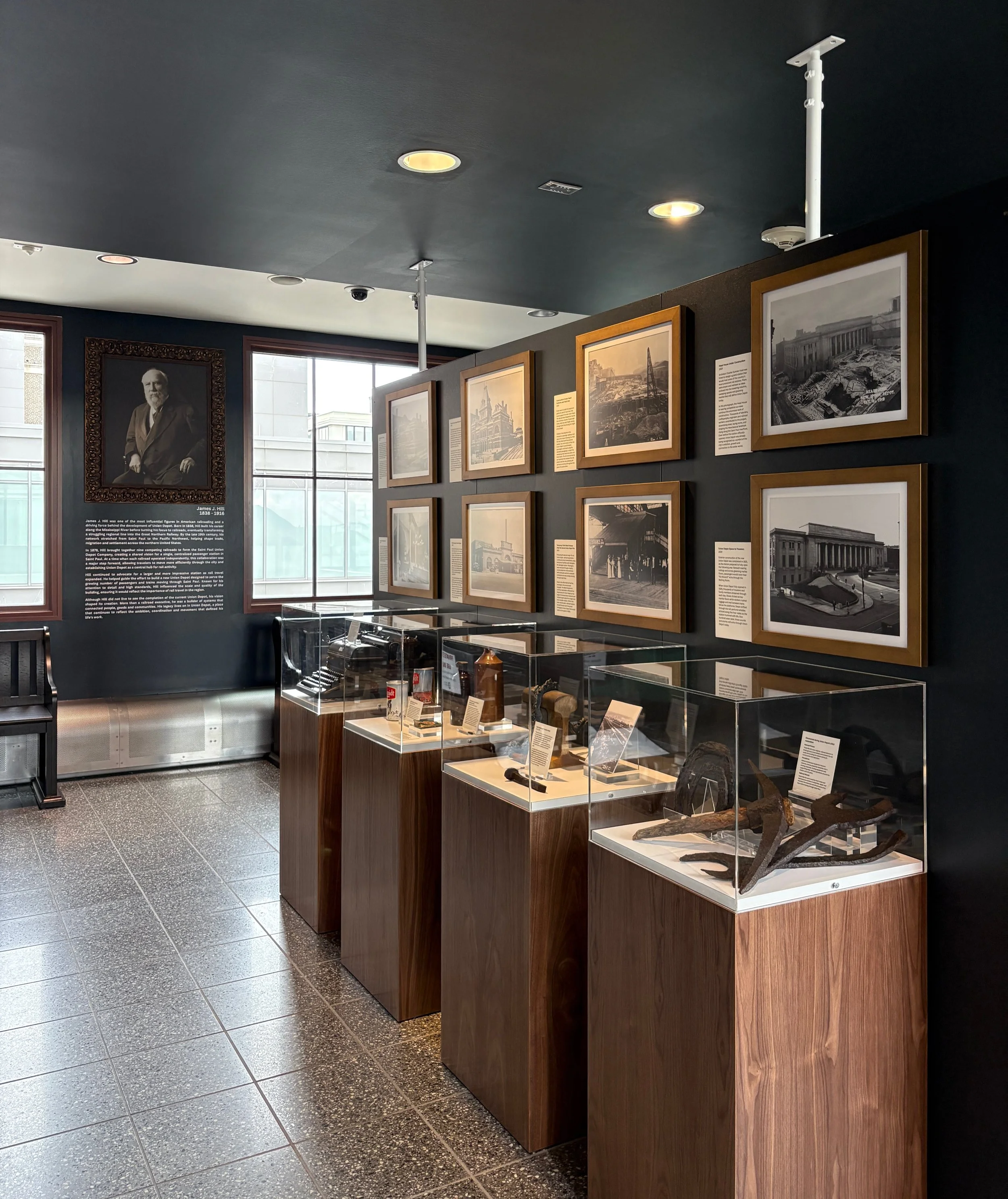
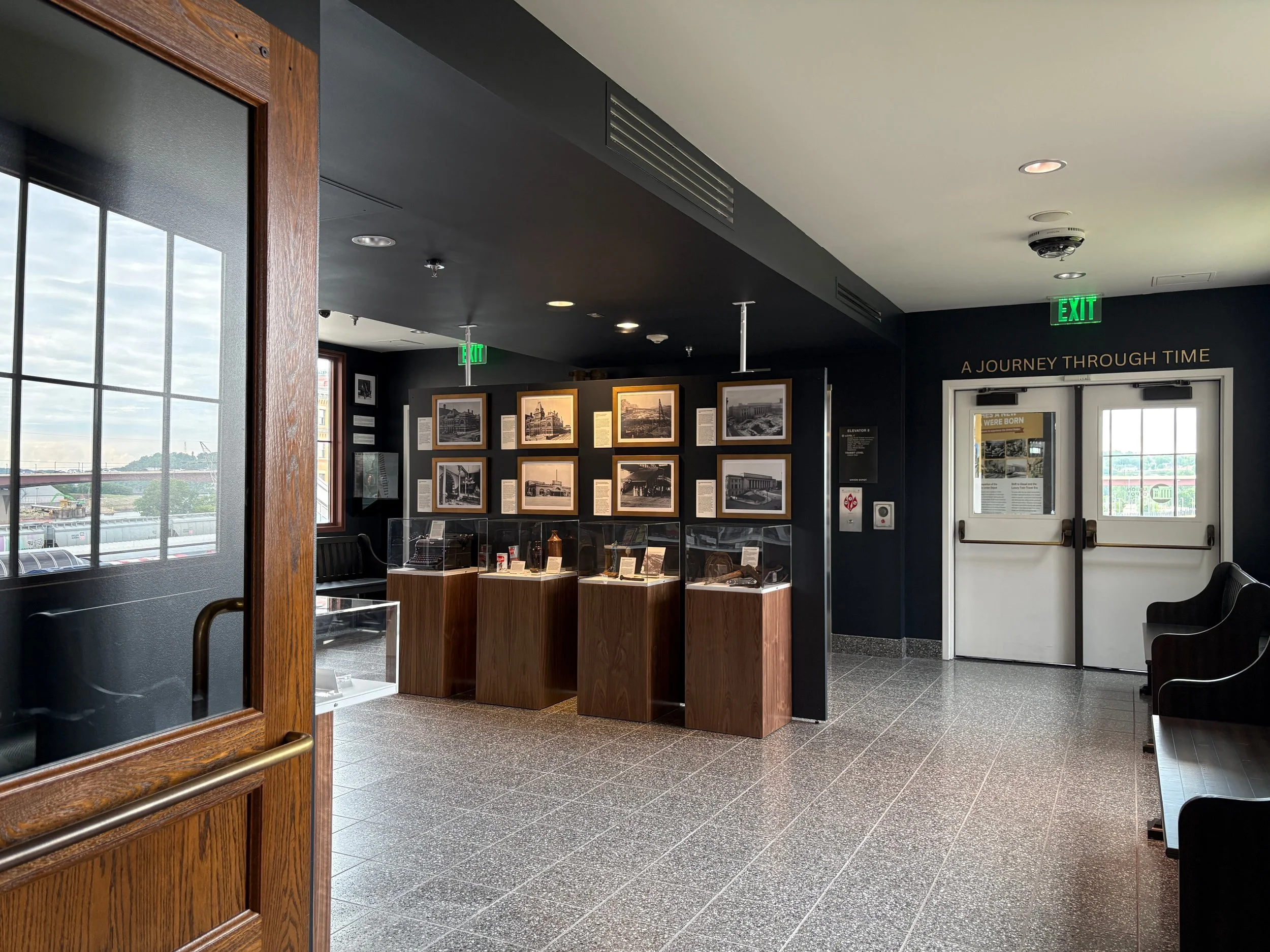
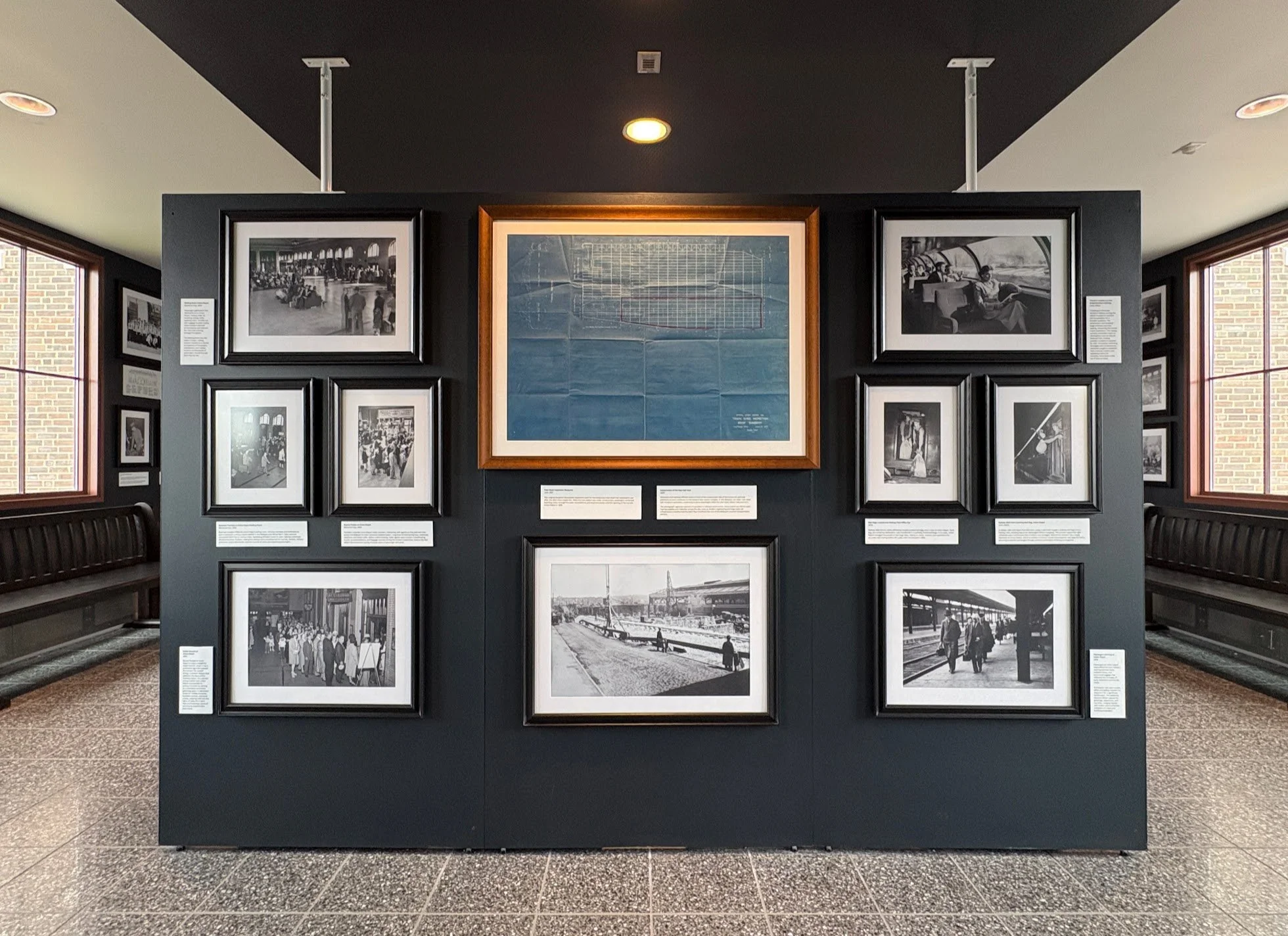
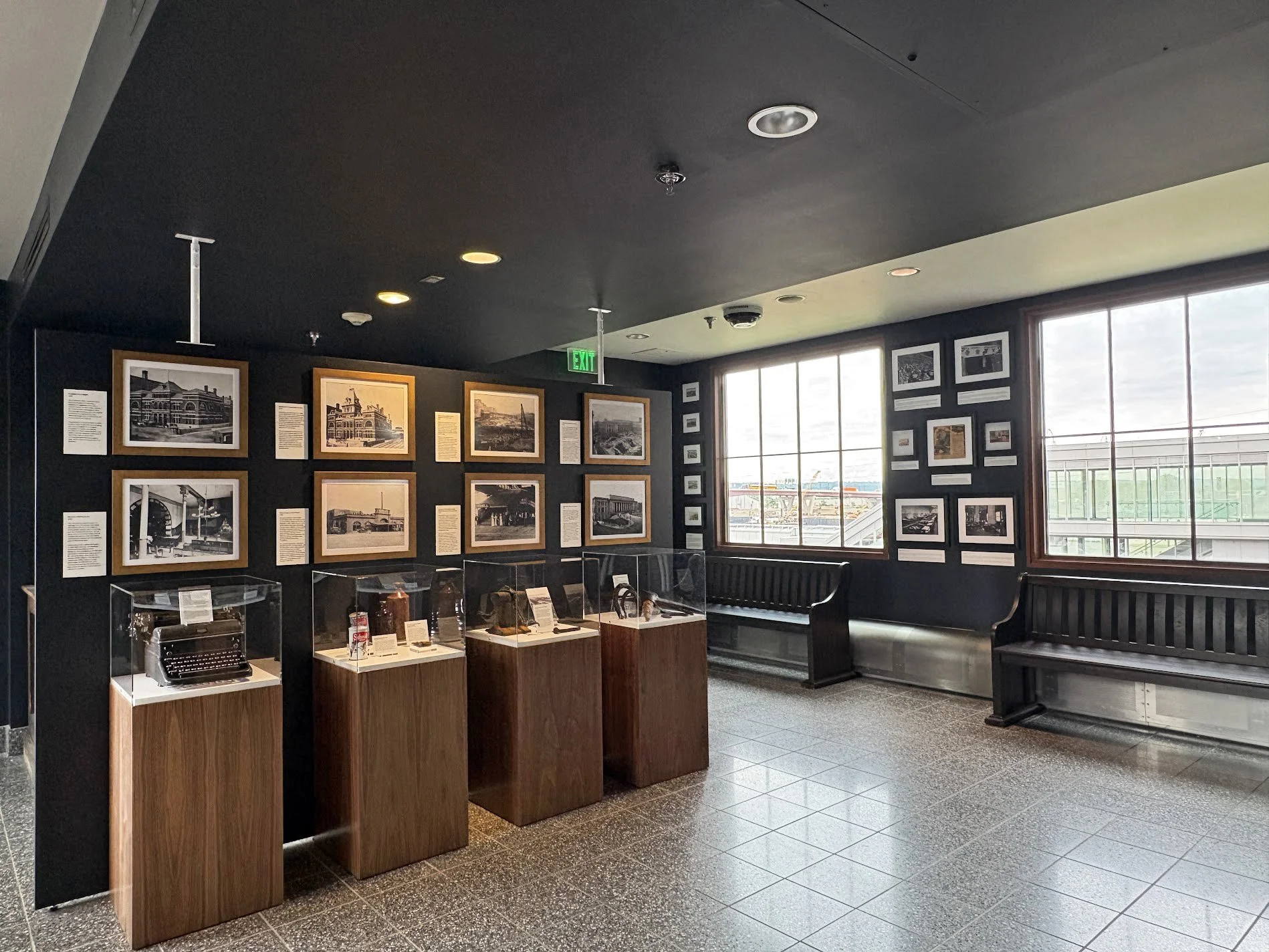
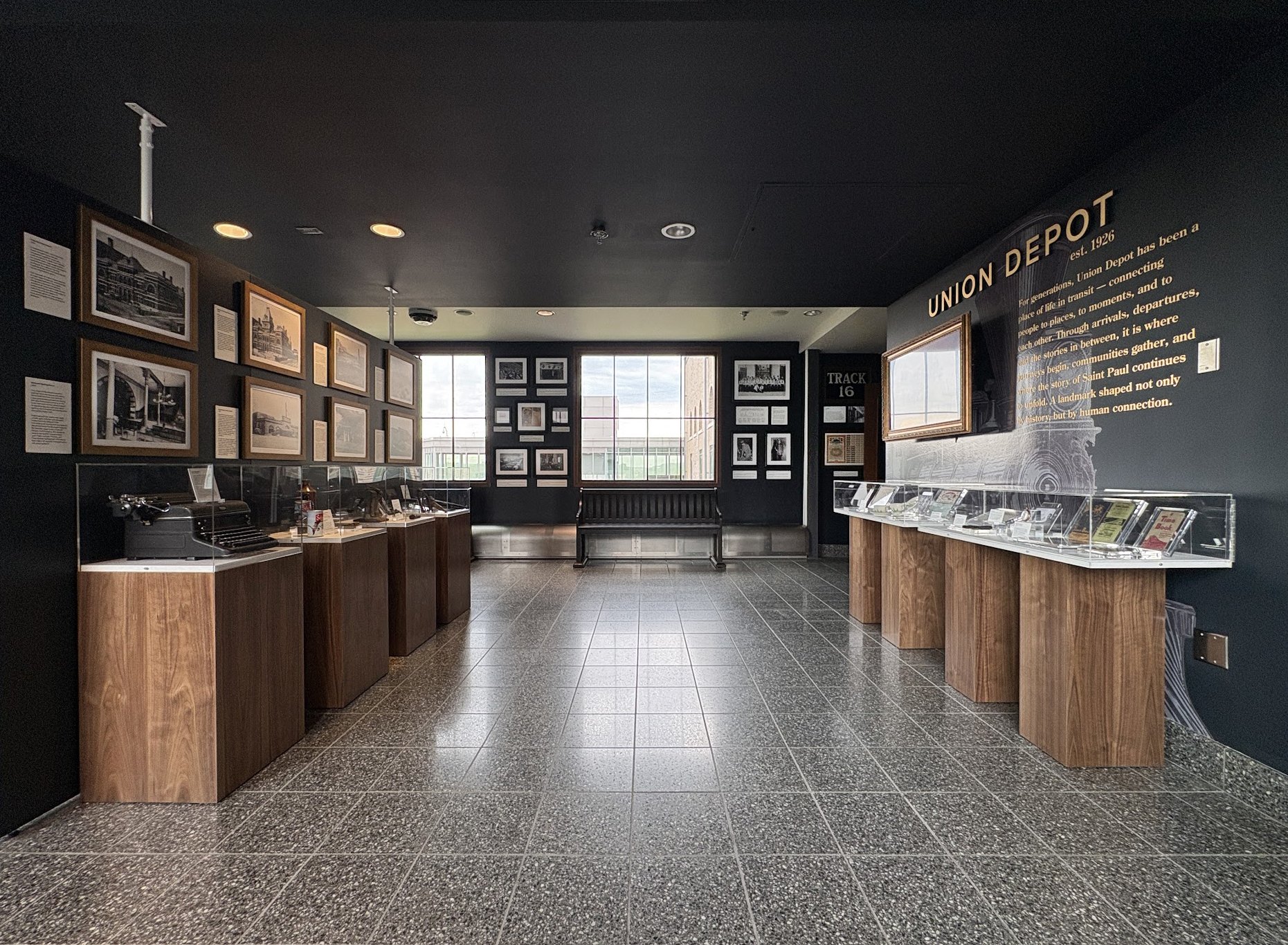
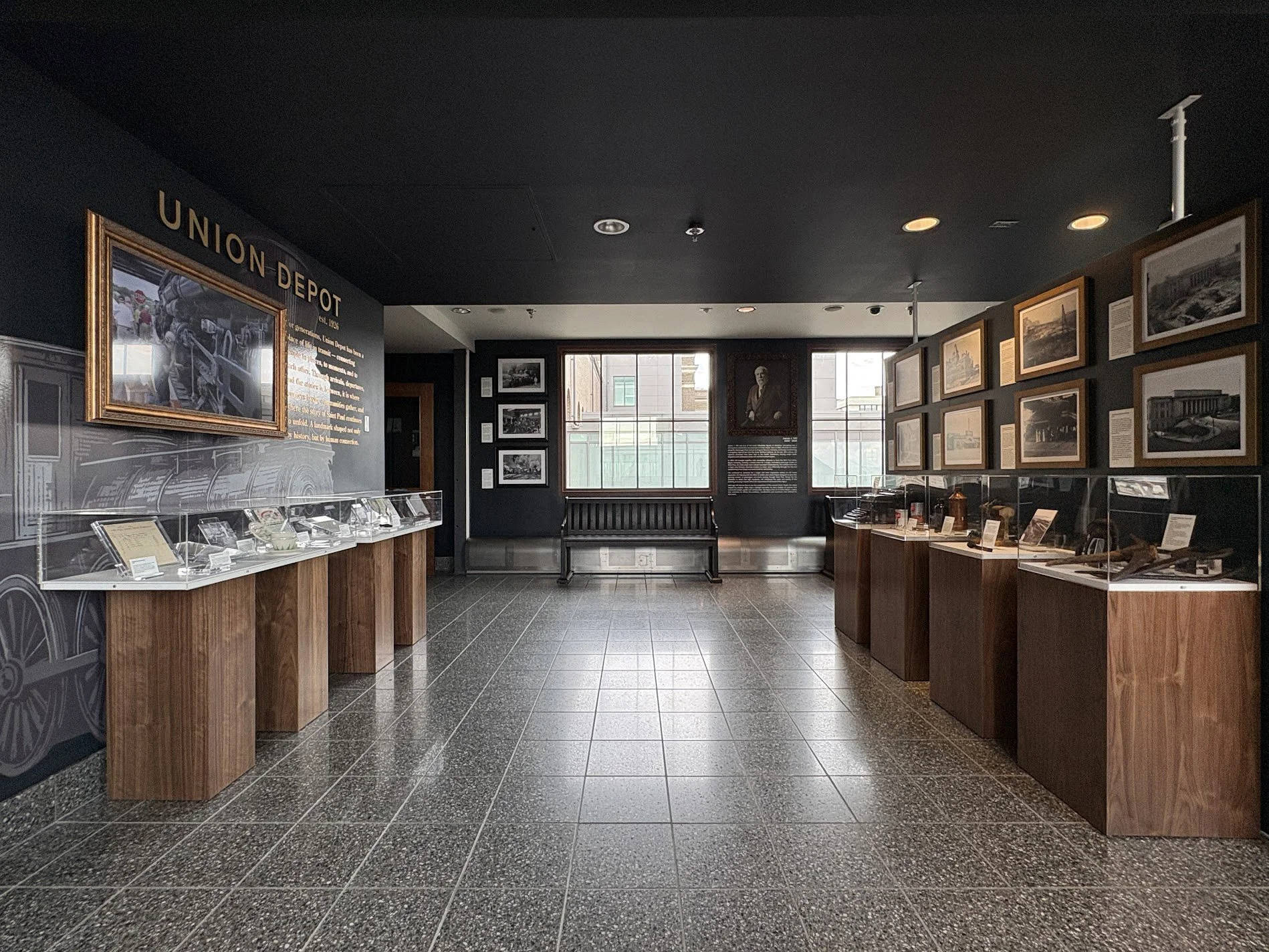
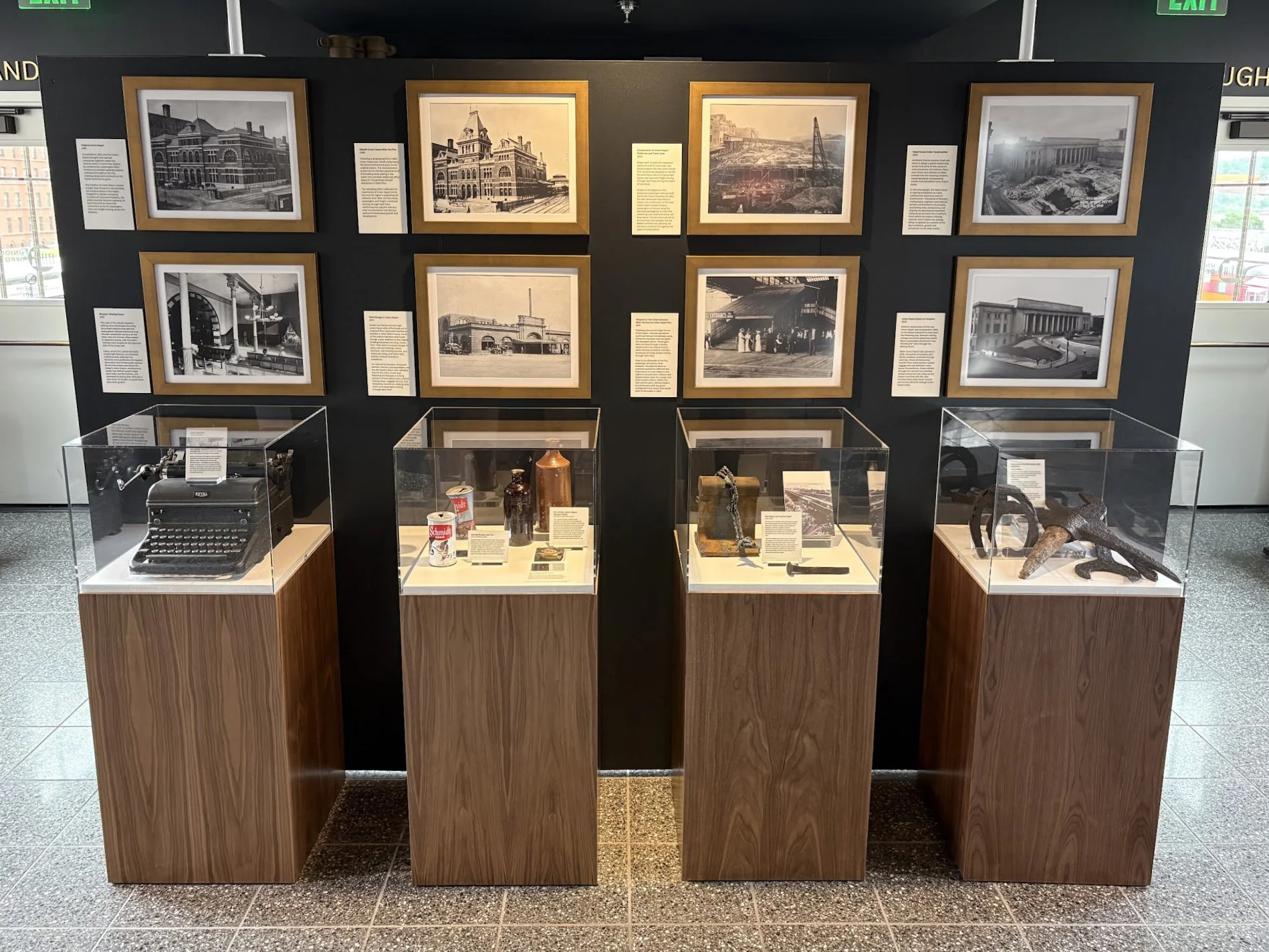
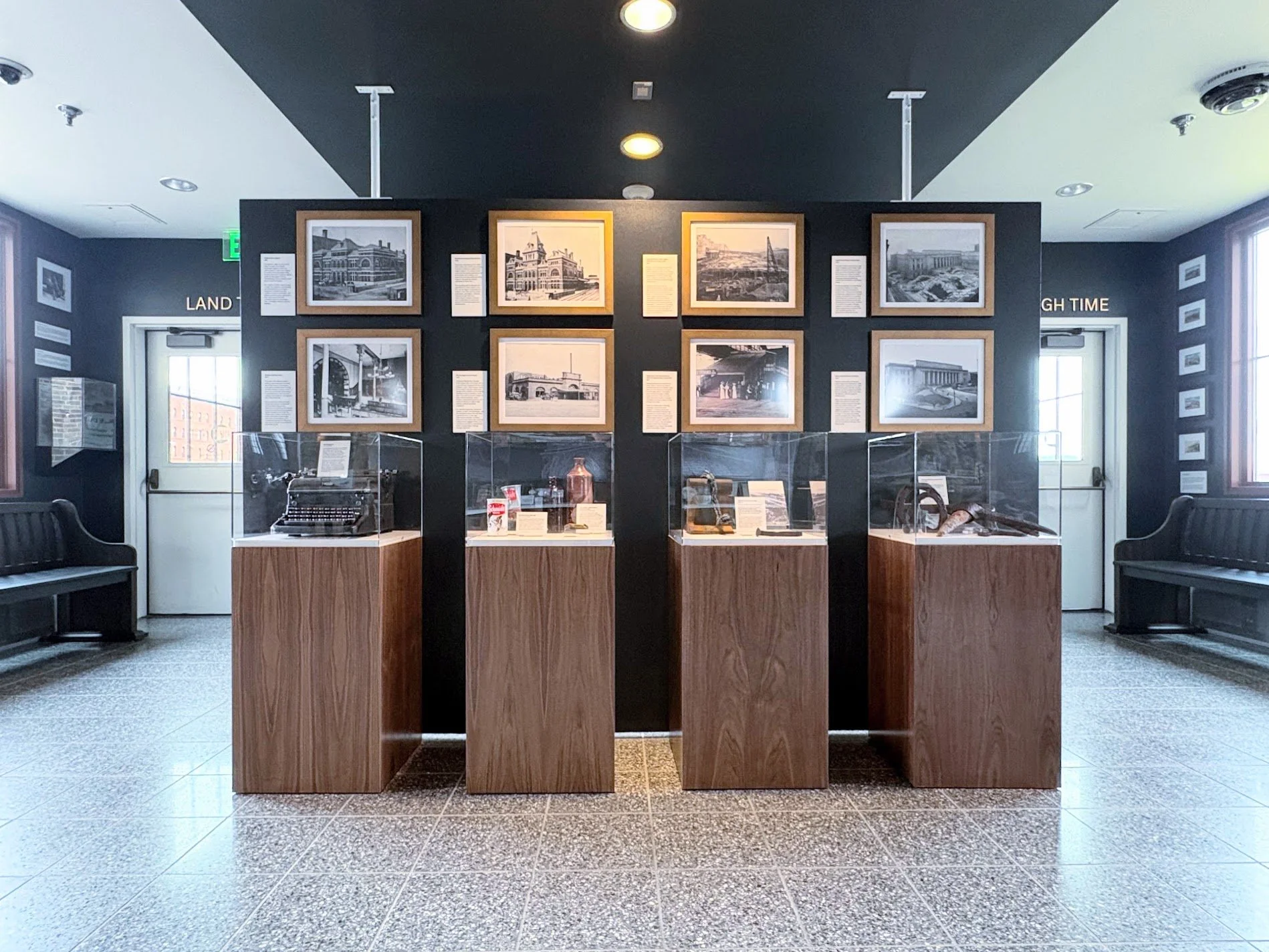
Deep charcoal walls and ceilings create a refined backdrop for historic photography and artifacts. Warm wood bases, antique‑inspired frames and brushed‑gold accents echo the depot’s original finishes, seamlessly blending old and new.
Curated Storytelling
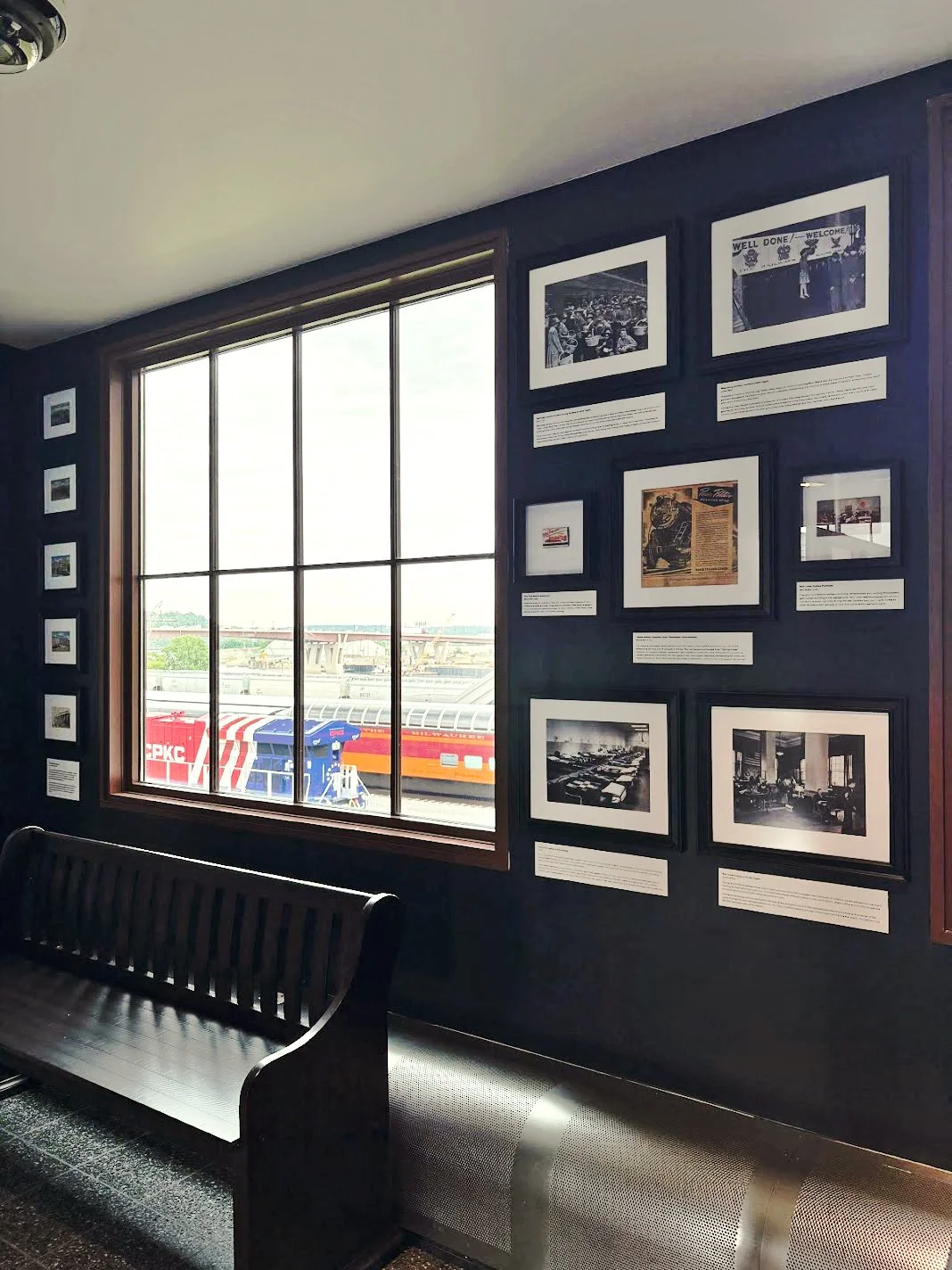
Archival photographs were reorganized into thematic gallery groupings, guiding visitors through Union Depot’s evolution — from construction and transportation milestones to community impact and changing roles over time.
Artifacts were placed in updated display cases with clear interpretive labels, making the museum more accessible and engaging for all visitors.
Architectural and Railroad Highlights
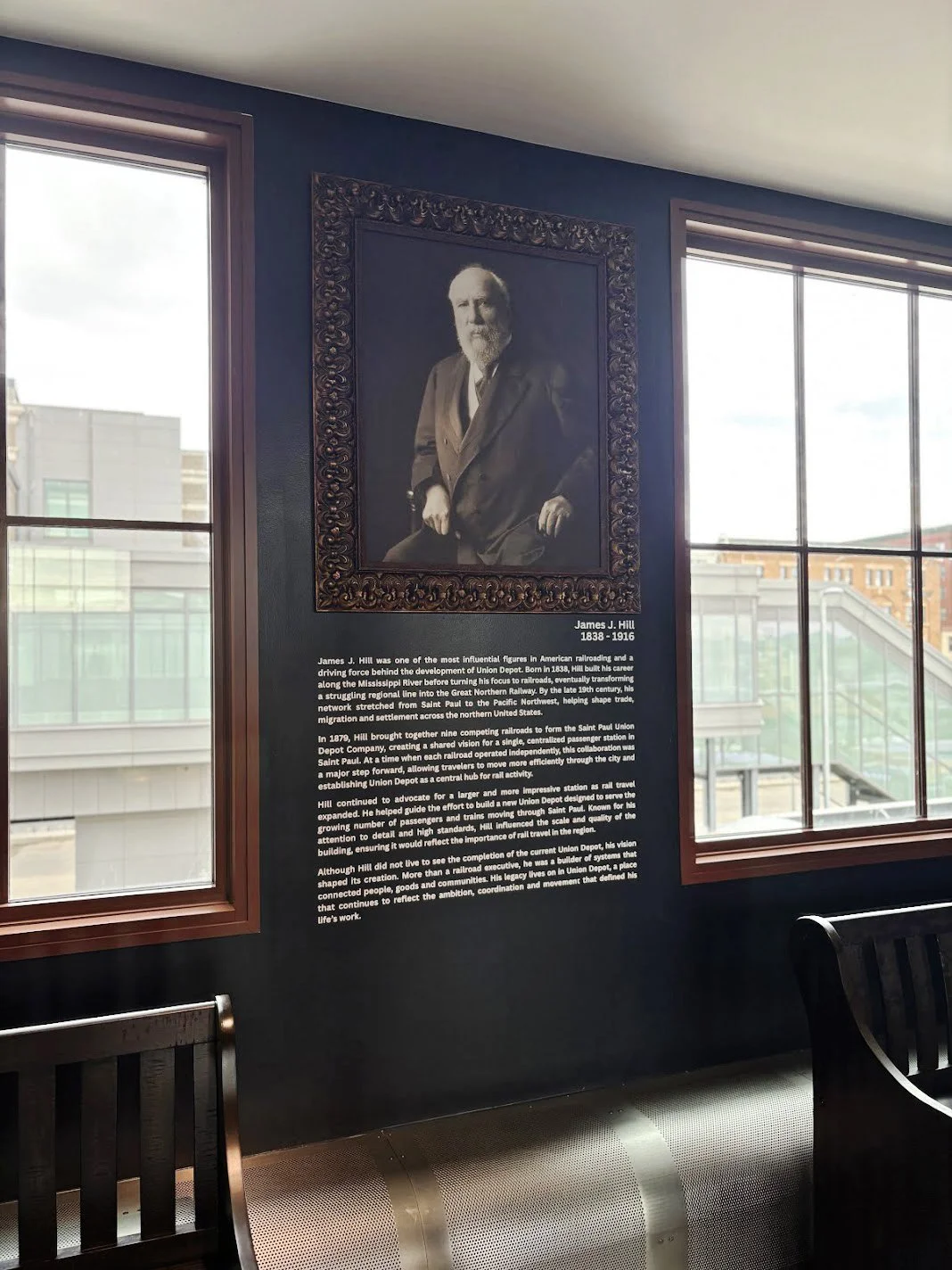
A large‑scale locomotive graphic, dimensional UNION DEPOT signage and an introductory history wall establish a strong focal point. Historic maps, blueprints and construction photographs add depth, reinforcing the depot’s architectural and transportation legacy.
The Results: A More Immersive, Accessible and Visually Impactful Museum
The renovated Historic Stairs museum now gives Union Depot’s history a stronger visual presence and a more memorable visitor experience in downtown St. Paul.
The Updated Museum Features:
A cohesive railroad history exhibit
Curated archival photography and historic artifacts
Custom museum display cases and exhibit graphics
Dimensional signage and branded environmental elements
Improved historical interpretation and visitor navigation
Comfortable seating and clearer circulation
A flexible exhibit environment for future updates
A polished design that complements Union Depot’s historic architecture
West Design transformed the former exhibit into an immersive museum destination that celebrates Union Depot’s legacy as a transportation hub, architectural landmark and gathering place in St. Paul, Minnesota.
By integrating museum exhibit design, historical curation, environmental graphics, visual merchandising and installation management, West Design delivered a complete renovation that makes Union Depot’s history more accessible, engaging and visually impactful — turning history into a story visitors can truly experience.
Historic Stair Museum Update Gallery: